
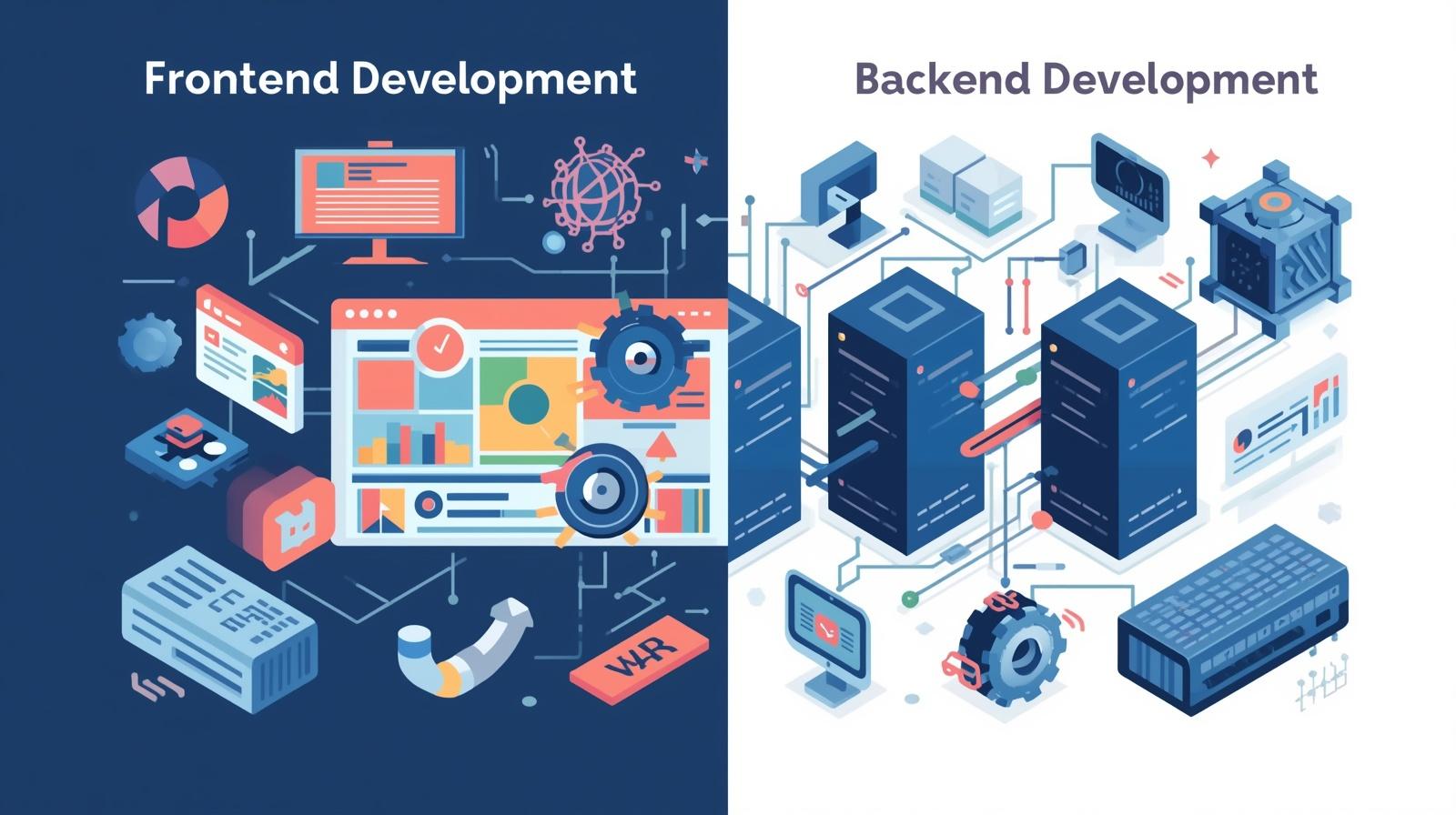
Frontend development focuses on the visual part of websites and apps that users interact with, while backend development manages the server, database, and logic behind the scenes. Choosing between these paths depends on your interest in design, coding logic, and system architecture. Both careers offer strong growth in the modern tech industry.
Frontend Development vs Backend Development
| Feature | Frontend Development | Backend Development |
| Main Focus | User interface and user experience | Server-side logic and data management |
| Technologies | HTML, CSS, JavaScript | Python, Java, PHP, Node.js |
| Work Type | Design implementation and interactive features | Database handling and system architecture |
| User Interaction | Direct interaction with users | Works behind the scenes |
| Learning Curve | Easier for beginners with design interest | Requires strong programming logic |
Both frontend development and backend development are essential parts of modern web applications. Together, they create complete digital platforms that users rely on daily.
Understanding Frontend Development
Frontend development focuses on building the visual and interactive parts of a website or application. It includes everything users see and interact with, such as layouts, buttons, navigation, and animations. Developers use technologies like HTML, CSS, and JavaScript to create responsive and engaging user interfaces.
Explanation
Frontend developers are responsible for creating a smooth and attractive user experience.
Main responsibilities include:
- Design Implementation
Frontend developers convert design layouts into working websites. They ensure that visual elements appear exactly as intended on different devices. - Responsive Web Design
Websites must work properly on mobile phones, tablets, and desktops. Frontend developers adjust layouts and components for different screen sizes. - Interactive Features
Elements like sliders, animations, forms, and menus improve user engagement and make websites easier to use.
Frontend development is ideal for people who enjoy creativity along with coding.
Understanding Backend Development
Backend development manages the server-side operations that power websites and applications. It handles data storage, authentication systems, APIs, and application logic. Backend developers ensure that the system works smoothly, securely, and efficiently while processing requests from the frontend interface.
Explanation
Backend developers build the technical foundation that supports digital platforms.
Key backend responsibilities include:
- Database Management
Backend developers store, organize, and retrieve data efficiently using databases such as MySQL or MongoDB. - Server Logic
They write code that processes user requests, manages business logic, and sends responses to the frontend. - Security and Authentication
Systems must protect user data and restrict unauthorized access, which is handled through secure backend programming.
Backend development suits individuals who enjoy problem-solving and working with system architecture.
Key Skills Required for Frontend Development
Frontend development requires a combination of design awareness and programming skills. Developers must understand how users interact with digital interfaces and build responsive layouts that function smoothly on different devices. Knowledge of modern frameworks and browser compatibility is also important.
Important skills include:
- HTML and CSS
These technologies form the foundation of website structure and styling. They control page layout, colors, typography, and responsiveness. - JavaScript Programming
JavaScript adds functionality such as animations, interactive forms, and dynamic page updates. - Frontend Frameworks
Tools like React, Angular, and Vue simplify development and improve application performance. - User Experience Understanding
Developers must design interfaces that are easy to navigate and visually appealing.
Key Skills Required for Backend Development
Backend developers need strong programming logic and problem-solving abilities. Their work involves building server-side systems that manage data, application functionality, and performance. Knowledge of databases, APIs, and secure coding practices is essential for building reliable digital platforms.
Essential backend skills include:
- Programming Languages
Languages such as Python, Java, PHP, and Node.js are commonly used to build server-side applications. - Database Management
Backend developers must store and retrieve large amounts of data efficiently using structured databases. - API Development
APIs allow frontend and backend systems to communicate and exchange data smoothly. - System Performance Optimization
Developers ensure applications run quickly and handle large numbers of users.
Career Opportunities in Frontend Development and Backend Development
Both frontend and backend development offer strong career opportunities in the technology industry. Companies require skilled developers to build websites, mobile applications, and digital platforms. Professionals with expertise in either field can work in startups, software companies, or freelance projects.
Career paths include:
- Frontend Developer
Focuses on building user interfaces and improving user experience for websites and web applications. - Backend Developer
Specializes in server-side systems, database management, and application logic. - Full Stack Developer
Works on both frontend and backend systems, making them versatile and highly valuable in the job market.
In the middle of learning these technologies, many students choose professional training. For example, Navigo Academy offers a full-stack developer course in Jaipur, where students learn both frontend and backend development together to build complete web applications and prepare for industry roles.
Which Career Path Should You Choose?
Choosing between frontend and backend development depends on your interests and technical strengths.
Frontend development is best for:
- Creative Thinkers
People who enjoy design, layouts, and visual presentation often prefer frontend development. - User Experience Enthusiasts
Developers who want to improve how users interact with websites will find frontend roles rewarding. - Beginners in Programming
Many beginners start with frontend technologies because they are easier to understand visually.
Backend development is best for:
- Logic-Oriented Problem Solvers
Backend roles require strong analytical thinking and programming logic. - System and Data Enthusiasts
People interested in databases, servers, and system performance enjoy backend development. - Advanced Programmers
Developers who enjoy building complex application systems often choose backend careers.
How to Choose the Right Development Career
Follow these steps before selecting your career path.
1. Identify Your Interest
Determine whether you enjoy design and visual interfaces or logical programming and system architecture.
2. Explore Basic Technologies
Try learning basic HTML, CSS, JavaScript, or Python to understand which type of development feels more interesting.
3. Check Industry Demand
Both frontend and backend developers are highly demanded, but full stack developers with knowledge of both areas often have wider opportunities.
4. Join Professional Training
Structured courses help beginners learn industry tools, frameworks, and real project development.
5. Practice Through Projects
Hands-on projects help you understand real-world development challenges and improve coding skills.
Cost of Learning Web Development
The cost of learning web development depends on several factors.
Main factors affecting course pricing include:
- Course Depth
Basic frontend courses cost less, while full-stack programs covering both frontend and backend technologies may require more investment. - Training Duration
Short courses typically last a few weeks, while advanced professional programs may run for several months. - Practical Project Training
Courses that include real-world projects and portfolio development often provide better value. - Instructor Expertise and Placement Support
Institutes that offer mentorship, career guidance, and placement support may charge higher fees but provide better career outcomes.
Investing in professional training can significantly improve your job opportunities in the tech industry.
Conclusion
Frontend and backend development are both valuable and rewarding career paths in the modern technology industry. Frontend developers focus on user experience and design, while backend developers build the powerful systems that run applications. Choosing the right path depends on your interests, but learning both can open the door to a successful career in web development.
Frequently Asked Questions (FAQs)
1. Which is easier to learn: frontend development or backend development?
Frontend development is generally easier for beginners because it focuses on visual elements and basic programming concepts. Backend development requires deeper knowledge of programming logic, databases, and system architecture, making it slightly more complex for new learners.
2. Is frontend development a good long-term career?
Yes. Frontend development is a strong career choice because every digital platform needs a user-friendly interface. Skilled frontend developers who understand design principles and modern frameworks are highly valued in the technology industry.
3. Do backend development earn more than frontend development?
Salary depends on experience, skills, and the complexity of projects. Backend developers may earn slightly higher salaries in some roles because they handle system architecture and server logic, but experienced frontend developers also receive competitive compensation.
4. Can one person learn both frontend and backend development?
Yes. Developers who learn both frontend and backend technologies become full-stack developers. These professionals are highly in demand because they can build complete applications independently and handle multiple parts of the development process.
5. Which career path is better for beginners?
Beginners often start with frontend development because it provides visual feedback and simpler coding concepts. After gaining experience, many developers expand their skills to backend technologies and eventually become full-stack developers.