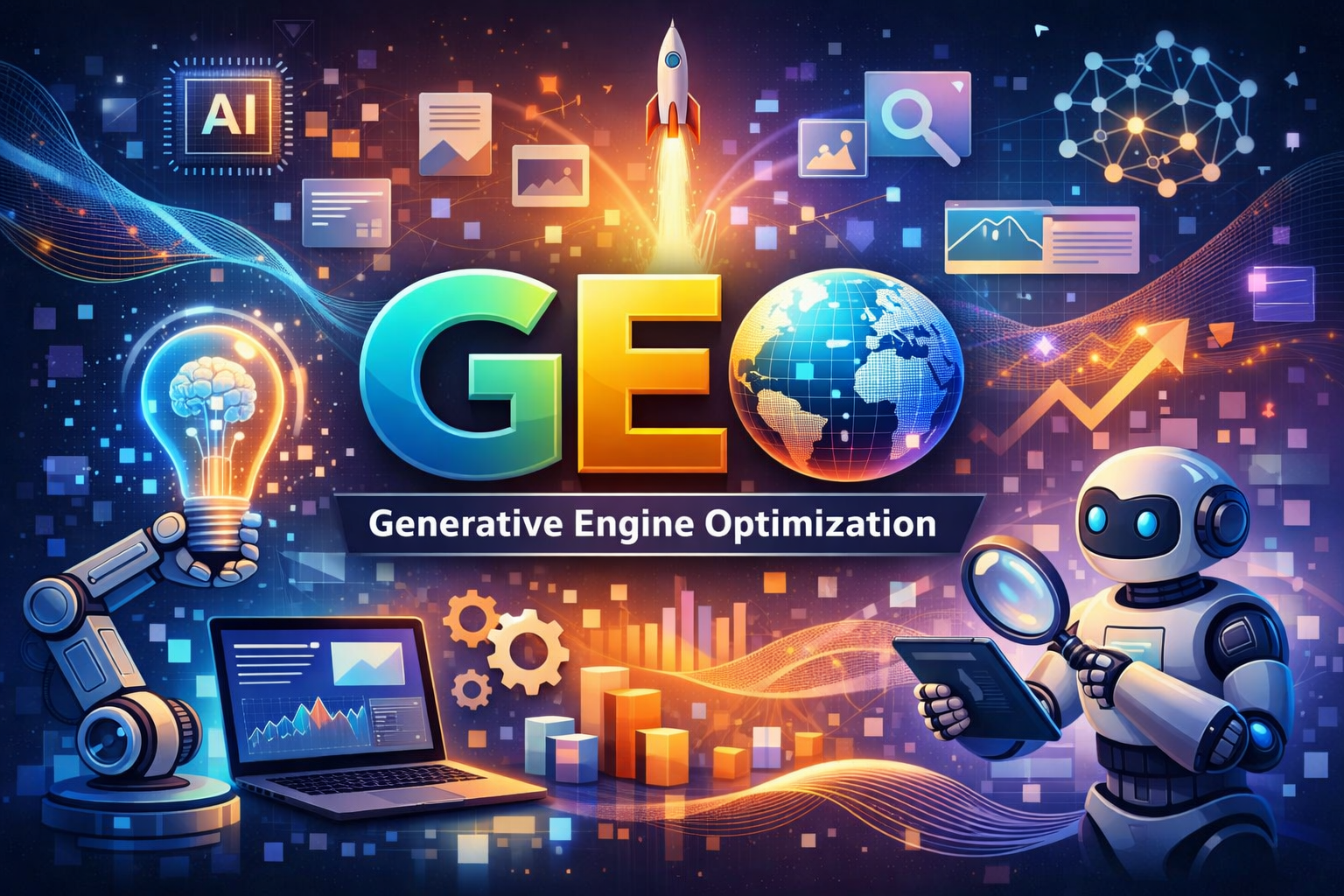
The internet is changing fast. Search engines are no longer just showing a list of blue links. They are now providing direct answers, summaries, and detailed responses right on the results page. This means the way we optimize content also needs to change. One concept that every marketer and content creator must understand is generative engine optimization geo, which is quickly becoming one of the most talked about strategies in the digital world.
In this complete guide, you will learn what GEO means, how it works, why it matters, and how you can use it to grow your online presence in 2026 and beyond.
What Does GEO Actually Mean?
GEO stands for Generative Engine Optimization. It is the process of optimizing your content so that generative search engines can pick it up, understand it, and use it in their responses.
Traditional SEO focuses on ranking your website higher in search results. GEO goes a step further. It focuses on making your content visible inside the answers that generative search engines create for users.
When someone asks a question, these engines pull information from multiple sources and create a single, combined answer. If your content is well optimized, it can be featured as part of that answer. This gives your brand massive visibility without the user even clicking a link.
So in simple words, GEO is about making sure your content gets chosen by smart search engines when they build their responses.

Why GEO Matters More Than Ever in 2026
A few years ago, getting on the first page of Google was enough. But things have shifted. Users now expect instant, clear, and complete answers. They do not want to browse through ten different websites to find what they need.
Here is why GEO is becoming so important:
- User behavior has changed. People want quick answers, not long searches.
- Search engines are evolving. They now generate responses instead of just listing websites.
- Competition is growing. More businesses are creating content, so standing out is harder.
- Visibility is everything. If your content appears in generated answers, your brand gets noticed instantly.
Ignoring GEO in 2026 is a big risk. If your competitors are optimizing for it and you are not, you will fall behind.
How GEO Is Different from Traditional SEO
Many people wonder if GEO is just another name for SEO. The answer is no. While both are related, they serve different purposes.
SEO focuses on:
- Ranking web pages on search engine result pages
- Getting clicks from organic listings
- Using keywords, backlinks, and technical optimization
GEO focuses on:
- Getting your content featured in generated answers
- Providing clear, structured, and factual information
- Building authority and trust so that engines choose your content
Think of it this way. SEO helps you get on the list. GEO helps you become part of the answer. Both are important, but GEO adds a whole new layer of opportunity.
The best strategy in 2026 is to combine both SEO and GEO so your content performs well everywhere.
Key Strategies to Optimize for GEO
Now let us talk about what you can actually do to optimize your content for generative engines. These strategies are simple but very effective.
1. Write Clear and Direct Answers
When you create content, answer questions directly. Do not beat around the bush. Start with a clear answer and then explain further. This makes it easy for engines to pick up your content.
2. Use Structured Formatting
Break your content into headings, subheadings, bullet points, and short paragraphs. Well structured content is easier to read and easier for search engines to understand.
3. Focus on Accuracy and Facts
Generative engines prefer content that is accurate and trustworthy. Always include correct data, statistics, and references when possible. Avoid making claims you cannot support.
4. Build Topical Authority
Create multiple pieces of content around the same topic. When your website covers a subject thoroughly, engines see you as an expert. This increases the chances of your content being selected.
5. Use Natural Language
Write the way people talk and ask questions. This helps your content match the queries that users type or speak into search engines.
6. Keep Content Updated
Outdated content loses value quickly. Review and update your articles regularly so they remain relevant and accurate.
Who Should Learn GEO in 2026?
GEO is not just for big companies or tech experts. It is for everyone who creates content or runs an online business.
Here is a list of people who should learn GEO:
- Content writers and bloggers who want their articles to reach more readers
- Business owners who want more visibility for their products or services
- Freelancers who want to offer modern marketing skills to clients
- Marketing professionals who want to stay ahead in their careers
- Students who are planning a career in digital marketing
If you are serious about learning these skills, enrolling in a good training program can give you the right foundation. Institutes that teach updated strategies, including GEO, prepare students for the real demands of the industry.
One such place worth mentioning is Navigo Academy, which focuses on practical and updated digital marketing training.
Common Mistakes to Avoid with GEO
While GEO is a powerful strategy, there are some common mistakes that people make. Avoiding these will save you time and effort.
- Stuffing keywords unnaturally. Write for humans first, then optimize for engines.
- Ignoring content quality. Thin or shallow content will not get picked up by generative engines.
- Not updating old content. Engines prefer fresh and current information.
- Copying from other sources. Original content always wins over duplicate material.
- Skipping structure. Walls of text are hard to read and hard for engines to process.
By avoiding these mistakes, you will be in a much stronger position to benefit from GEO.

The Future of Search and Content Optimization
The way people search for information will keep evolving. Voice search, visual search, and conversational queries are becoming more common every year. This means content creators need to adapt constantly.
GEO is not a passing trend. It is the next step in how search works. As generative engines become more advanced, the demand for well optimized, high quality content will only grow.
Businesses and individuals who start learning and applying generative engine optimization geo now will have a huge advantage over those who wait. The earlier you begin, the better your results will be.
Conclusion
GEO is changing the way we think about online visibility. It goes beyond traditional SEO and focuses on making your content part of the answers that generative search engines deliver to users. In 2026, understanding and applying GEO is no longer optional. It is essential for anyone who wants to succeed online.
Whether you are a student, a business owner, or a marketing professional, learning GEO will give you a clear edge. If you are looking to build a strong career in this field, choosing the right digital marketing institute in jaipur can make a real difference in your growth. Start with the basics, follow the strategies shared in this guide, and keep improving your content over time.
The digital world rewards those who adapt early. So take the first step and make GEO a part of your content strategy.
Frequently Asked Questions(FAQs)
- What is GEO in simple words?
GEO stands for Generative Engine Optimization. It is the process of optimizing your content so that generative search engines can use it in their answers and responses. - Is GEO the same as SEO?
No, they are different. SEO focuses on ranking your website in search results. GEO focuses on getting your content featured inside the generated answers that search engines provide. - Why is GEO important in 2026?
Because search engines are now generating direct answers for users. If your content is not optimized for this, you will miss out on a lot of visibility and traffic. - Can beginners learn GEO?
Yes, absolutely. GEO concepts are easy to understand if you learn them step by step. Starting with a good digital marketing institute in jaipur can help you build a strong foundation. - What type of content works best for GEO?
Content that is clear, accurate, well structured, and directly answers user questions performs best. Using headings, bullet points, and simple language also helps. - How can I start optimizing my content for GEO?
Begin by writing clear answers to common questions in your niche. Use proper formatting, keep your facts accurate, and update your content regularly to stay relevant.