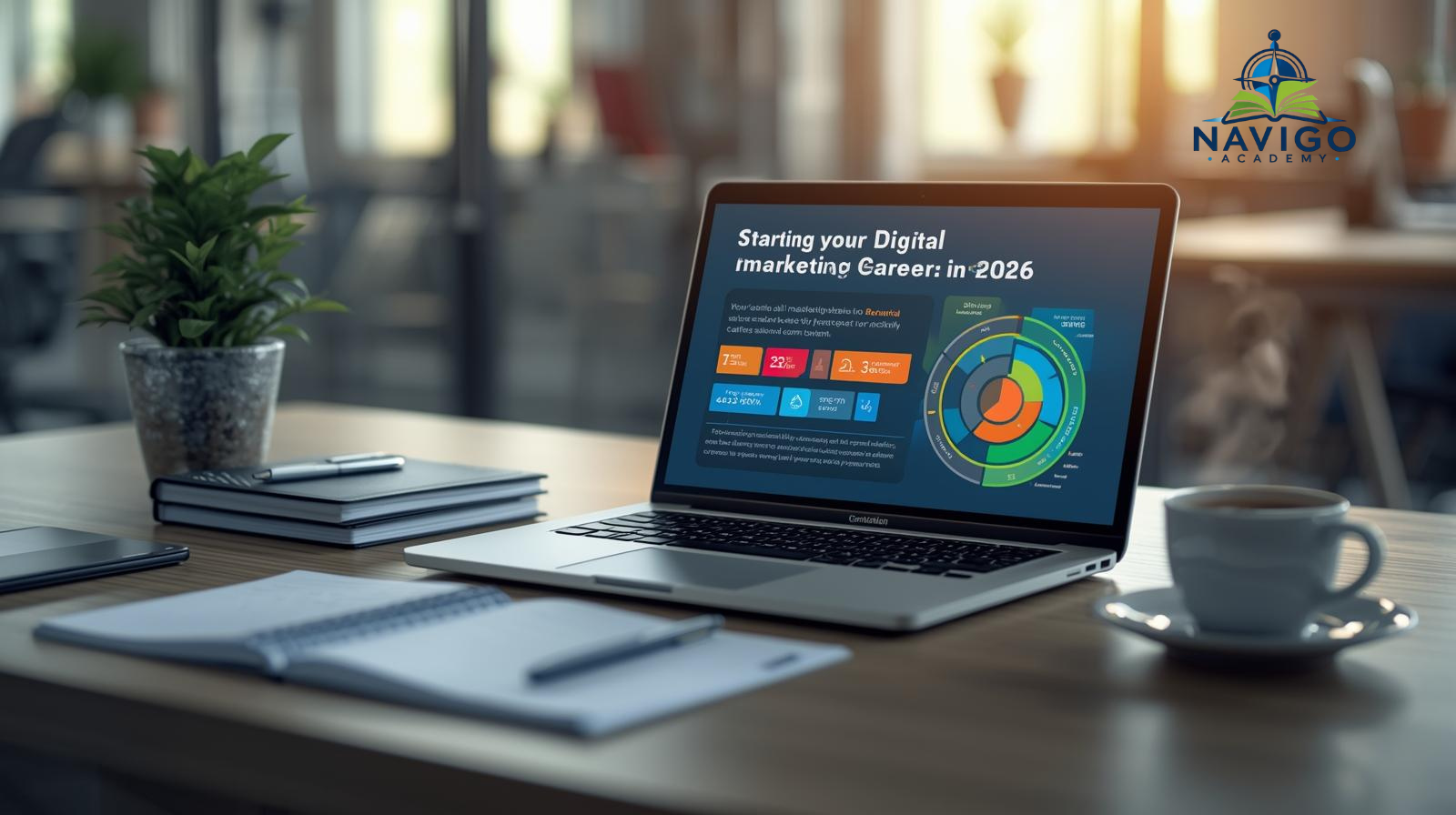
Digital marketing is no longer just a trending career option; it has become one of the most in-demand skill sets across industries. Whether you are a fresh graduate, a career switcher, or someone looking to freelance, 2026 is the perfect time to step into this field. Businesses of every size need professionals who understand how to drive growth online, and that demand is only going to increase.
This guide walks you through everything you need to know to build a successful career in digital marketing, from the skills you need to learn, the career paths available, and the steps you should take to get started.

Digital Marketing
Why Digital Marketing Is a Smart Career Choice in 2026
The world has shifted online, and businesses are following their customers. Companies now spend more on digital advertising than on traditional media. Social media platforms, search engines, and email campaigns have become the primary channels for reaching audiences. This means brands need trained professionals who can plan, execute, and measure digital campaigns effectively.
The career scope is massive. From small startups to global corporations, everyone is hiring digital marketers. Salaries are competitive, remote opportunities are abundant, and the field allows you to specialize in areas that genuinely interest you.
Core Skills You Need to Learn in Digital Marketing
Before you start applying for jobs, you need to build a strong foundation. Here are the essential skills every aspiring digital marketer should develop:
1. Search Engine Optimization (SEO)
SEO is the backbone of digital marketing. It involves optimizing websites and content so they rank higher on search engines. Understanding keyword research, on-page optimization, technical SEO, and link building will make you valuable to any employer or client you serve.
2. Social Media Marketing
Platforms such as Instagram, LinkedIn, Facebook, and X (formerly Twitter) are powerful tools for brand building and lead generation. You need to understand how each platform works, what type of content performs best, and how to run paid ad campaigns that deliver measurable results.
3. Content Marketing
Content is what drives engagement, trust, and conversions. Learning how to create blog posts, videos, infographics, and email newsletters that connect with a target audience is a skill that every digital marketer must have in their toolkit.
4. Pay-Per-Click Advertising (PPC)
Google Ads and social media advertising require a clear understanding of bidding strategies, audience targeting, ad copywriting, and budget management. PPC skills allow you to generate quick results for businesses and prove your impact through data.
5. Email Marketing
Despite being one of the oldest digital channels, email remains one of the most effective. Knowing how to build email lists, write compelling subject lines, segment audiences, and automate campaigns gives you a significant advantage in the job market.
6. Analytics and Data Interpretation
Every campaign produces data. The ability to read Google Analytics reports, track KPIs, and make data-driven decisions separates good marketers from great ones. Employers want people who can show results with numbers, not just creative ideas.
Step-by-Step Roadmap to Start Your Career in Digital Marketing
1. Understand the Industry Landscape
Spend time researching the digital marketing ecosystem. Follow industry blogs, listen to podcasts, and study how successful brands run their campaigns. This will give you context and help you identify which specialization excites you the most.
2. Enroll in a Structured Program
Self-learning is possible, but a structured digital marketing course gives you a clear path from beginner to job-ready professional. A good program covers all the essential modules, provides hands-on projects, and prepares you for real-world challenges that clients and employers expect you to handle.
3. Build a Portfolio
Theory alone will not land you a job. Start a blog, manage social media for a local business, or run small ad campaigns with your own budget. Document your results and create a portfolio that showcases your ability to deliver outcomes.
Hiring managers care about what you have done, not just what you know.
4. Apply and Network
Update your LinkedIn profile, connect with professionals in the field, attend webinars, and start applying for internships or entry-level positions. Networking plays a huge role in landing your first opportunity, so do not underestimate the power of genuine connections.
Choosing the Right Learning Partner
The quality of your training determines how prepared you are for the real world. Not every program delivers the same value. Some focus only on theory, while others provide outdated content that does not reflect current industry practices.
That is why choosing the right institute matters more than you might think.
Navigo Academy has established itself as the best digital marketing institute for aspiring marketers who want practical, industry-relevant training. With a curriculum designed around real campaigns, mentorship from experienced professionals, and placement support that connects students with top employers, the academy ensures every learner graduates with the confidence and skills needed to succeed in 2026 and beyond.
Career Paths in Digital Marketing
One of the best things about this field is the variety of roles available. Here are some popular career paths:
SEO Specialist
You focus on improving a website’s search engine rankings through keyword strategy, content optimization, and technical improvements. Companies across every industry need SEO professionals because organic traffic is one of the most cost-effective ways to grow online.
Social Media Manager
You plan, create, and manage content across social media platforms. This role involves community management, campaign strategy, and performance tracking. It is ideal for creative individuals who enjoy storytelling and audience engagement.
PPC Analyst
You manage paid advertising campaigns on Google, Facebook, and other platforms. This role requires strong analytical skills and the ability to optimize campaigns for maximum return on investment.
PPC analysts are highly valued because they directly impact a company’s revenue.
Content Strategist
You develop the overall content plan for a brand — what to publish, where to publish, and how to measure its effectiveness. This role combines creativity with strategic thinking and is perfect for those who enjoy both writing and planning.
Email Marketing Specialist
You handle email campaigns, automation sequences, and subscriber engagement strategies. This role demands attention to detail, strong copywriting skills, and the ability to analyze conversion metrics.
Digital Marketing Manager
After gaining experience in one or more specializations, many professionals move into management roles. You oversee the entire digital strategy, manage teams, allocate budgets, and report results to leadership.
This is a senior-level position with excellent earning potential.
Salary Expectations in 2026
Salaries in digital marketing vary based on specialization, experience, and location.
- Entry-level: ₹3 – ₹5 LPA in India / $40,000 – $55,000 in the US
- Mid-level professionals: significantly higher
- Managerial roles: ₹12 – ₹20 LPA or more
Freelancers and consultants have the potential to earn even more, especially if they build a strong personal brand and client base.
The field rewards skill and results, meaning your income growth is directly tied to the value you deliver.
Conclusion
Starting a career in digital marketing in 2026 is one of the smartest decisions you can make. The industry is growing fast, the opportunities are diverse, and the barrier to entry is lower than most traditional careers.
What matters is that you:
- Invest in the right training
- Build real skills through practice
- Stay consistent in learning
The digital world rewards those who are curious, adaptable, and willing to put in the effort.
Your career in digital marketing starts with one decision; make it today.
Frequently Asked Questions (FAQs)
Q1: Do I need a degree to start a career in digital marketing?
No, a formal degree is not mandatory. Many successful digital marketers come from non-technical backgrounds. What matters most is having the right skills, certifications, and a strong portfolio that demonstrates your ability to deliver results.
Q2: How long does it take to learn digital marketing?
A comprehensive digital marketing course typically takes 3 to 6 months to complete. However, mastering the field requires continuous learning and hands-on practice.
Q3: Can I start freelancing in digital marketing without prior experience?
Yes, but it is advisable to gain some practical experience first. Start by managing campaigns for small businesses or personal projects. Once you have case studies and results, attracting clients becomes easier.
Q4: Which specialization in digital marketing has the highest demand?
SEO, PPC, and social media marketing are among the most in-demand specializations in 2026. However, demand varies by industry and region.
Q5: Is digital marketing a good career for someone over 30?
Absolutely. Digital marketing values skills and results over age. Many professionals successfully transition into this field in their 30s and 40s, bringing valuable experience from their previous careers.