Full stack development is one of the most in-demand skills in India’s booming IT industry, and naturally, the question on every aspiring developer’s mind is: how much can I actually earn? The Full Stack Developer Salary in India varies widely depending on the company, city, experience level, and tech stack you specialize in. In this article, we break down which companies pay the best, how salaries scale with experience, and what you can do to land a higher-paying full stack role.
What Determines Full Stack Developer Salary in India?
Several factors influence the Full Stack Developer Salary in India, including:
- Experience level freshers earn significantly less than developers with 5+ years of experience
- Company type product-based companies and unicorn startups typically pay more than service-based firms
- Location metro cities like Bangalore, Hyderabad, and Pune offer higher pay than tier-2 cities
- Tech stack expertise knowledge of in-demand stacks like MERN, MEAN, or Java Spring Boot with React commands a premium
- Company size and funding well-funded startups and MNCs often have bigger compensation budgets
Full Stack Developer Salary in India by Experience Level
| Experience Level | Average Annual Salary (INR) |
|---|---|
| Fresher (0–1 year) | ₹3.5 LPA – ₹6 LPA |
| Junior (1–3 years) | ₹6 LPA – ₹10 LPA |
| Mid-level (3–6 years) | ₹10 LPA – ₹18 LPA |
| Senior (6–10 years) | ₹18 LPA – ₹30 LPA |
| Lead/Architect (10+ years) | ₹30 LPA – ₹50+ LPA |
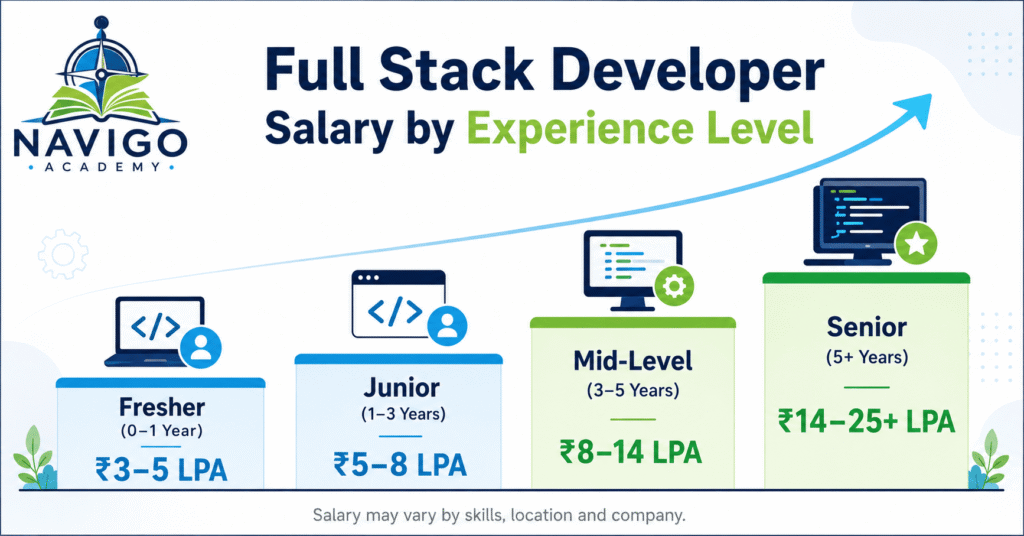
Note: These figures are general industry estimates and can vary based on the specific role, employer, and negotiation. Always verify current figures via trusted salary platforms like Glassdoor, AmbitionBox, or Levels.fyi before making career decisions.
Top Companies Offering the Best Full Stack Developer Salary in India
1. Product-Based Tech Giants
Companies like Google, Microsoft, Amazon, and Adobe are known for offering some of the highest compensation packages for full stack developers in India, often including strong base pay, stock options, and performance bonuses.
2. Unicorn Startups
High-growth startups such as Swiggy, Zomato, Razorpay, CRED, and Meesho compete aggressively for full stack talent, frequently matching or exceeding product-company salaries to attract skilled developers.
3. Fintech Companies
Fintech firms like PhonePe, Paytm, and Groww typically offer competitive Full Stack Developer Salary in India packages due to the high demand for secure, scalable applications in the financial sector.
4. IT Consulting and Service Giants
Companies like TCS, Infosys, Wipro, and Accenture offer more standardized pay scales but provide stability, global exposure, and steady career progression, especially for developers early in their careers.
5. E-commerce Platforms
Businesses like Flipkart, Myntra, and Nykaa invest heavily in full stack engineering talent to support large-scale consumer-facing platforms, often resulting in attractive compensation packages.
Skills That Boost Your Full Stack Developer Salary in India
To command a higher Full Stack Developer Salary in India, focus on building expertise in:
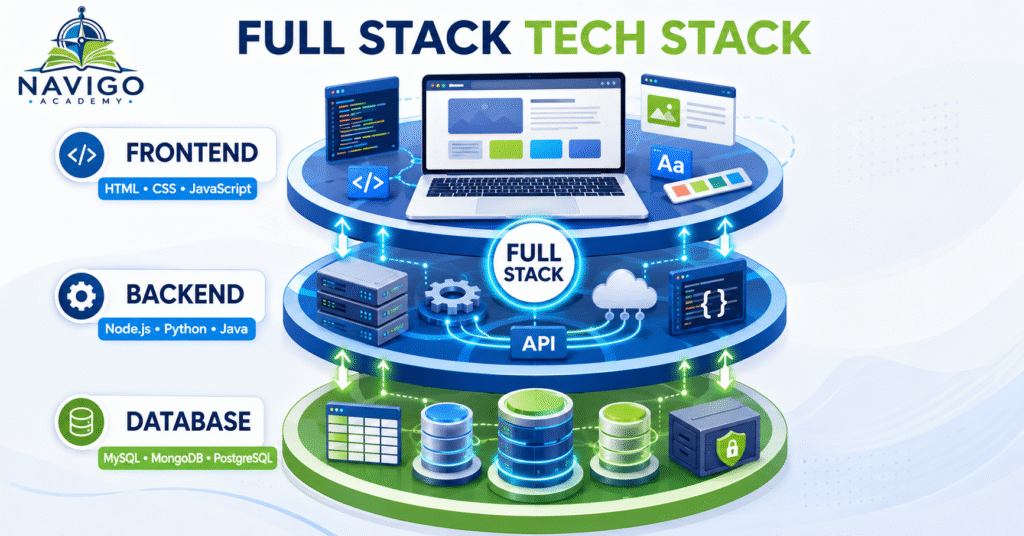
- Frontend frameworks: React.js, Angular, or Vue.js
- Backend frameworks: Node.js, Django, or Spring Boot
- Databases: MongoDB, PostgreSQL, MySQL
- Cloud platforms: AWS, Azure, or Google Cloud
- DevOps basics: Docker, CI/CD pipelines, Git
- System design fundamentals for senior-level roles
Enrolling in a structured, project-based training program can help you build these skills faster than self-study alone, which is why many aspiring developers in Jaipur look for the best IT training institute in Mansarovar Jaipur to get industry-ready with mentorship and placement support.
How to Negotiate a Better Full Stack Developer Salary
- Research market rates for your experience level and city before interviews
- Highlight measurable project outcomes, not just technologies used
- Get certified in high-demand frameworks to strengthen your profile
- Build a strong GitHub portfolio showcasing full stack projects
- Consider product-based companies or well-funded startups for faster salary growth
Conclusion
The Full Stack Developer Salary in India can range from a modest starting package for freshers to well over ₹30 LPA for experienced professionals at top companies. Product-based giants, fintech firms, and fast-scaling startups generally offer the most competitive pay, while service-based companies provide stability and steady growth. If you’re serious about becoming a full stack developer, investing in the right skills and choosing to train at Navigo Academy can give you the practical, job-ready foundation employers are actively looking for. Start building your skills today to position yourself for the highest-paying opportunities in India’s tech industry.
FAQs
1. What is the average Full Stack Developer Salary in India for freshers?
Freshers typically earn between ₹3.5 LPA and ₹6 LPA, depending on the company and city.
2. Which company pays the highest salary to full stack developers in India?
Product-based tech giants and well-funded unicorn startups generally offer the highest packages, often including stock options and bonuses on top of base pay.
3. Does city location affect full stack developer salary?
Yes, metro cities like Bangalore and Hyderabad typically offer higher salaries than tier-2 or tier-3 cities due to higher demand and cost of living.
4. Is MERN stack in demand for high-paying full stack roles?
Yes, MERN (MongoDB, Express, React, Node.js) remains one of the most in-demand stacks for full stack roles in both startups and product companies.
5. How many years of experience are needed to earn 20+ LPA as a full stack developer?
Typically, developers need 5–8 years of relevant experience along with strong system design and leadership skills to reach this range.
6. Do full stack developers need cloud computing knowledge?
Yes, familiarity with AWS, Azure, or Google Cloud is increasingly expected, especially for mid-to-senior roles.
7. Can a full stack developer switch from a service-based to a product-based company?
Yes, many developers transition from service-based firms to product companies by upskilling and building strong personal projects or open-source contributions.