
Every website, every app, and every digital product you interact with has a frontend, the visual layer that you see, tap, scroll, and navigate. The people who build this layer are frontend developers, and in 2026, they are among the most in-demand professionals in the tech industry. Companies of every size need skilled frontend developer who can create fast, responsive, and visually appealing digital experiences.
If you enjoy building things, have a creative side, and want a career with excellent growth potential, frontend development is a path worth pursuing. This guide walks you through everything you need, from the core skills to master, the steps to follow, and how to position yourself for success in the job market.
What Does a Frontend Developer Do?
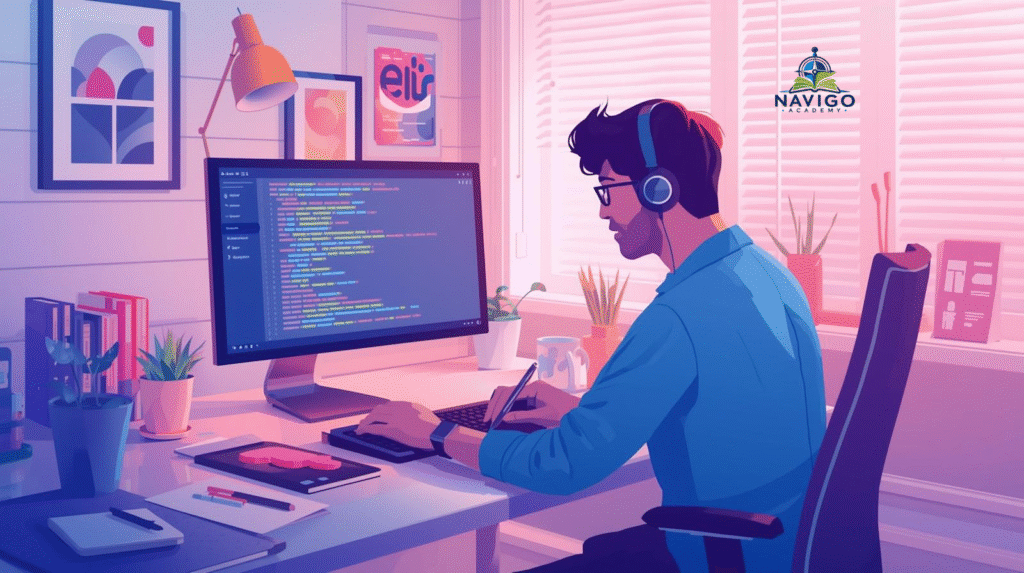
A frontend developer is responsible for building everything a user interacts with on a website or application. The layout, the buttons, the forms, the animations, the menus, all of it is the work of a frontend developer. The goal is to take a design and turn it into a fully functional, interactive experience that runs smoothly in a web browser.
This role sits at the intersection of design and technology. You need an eye for visual detail and the technical ability to write clean, efficient code. It is a career that rewards creativity, precision, and a genuine desire to build things that people use every day.
Why Frontend Development Is a Strong Career Choice
The Demand Is Growing Every Year
Every business needs a digital presence, and every digital presence needs a frontend. From startups building their first product to large corporations redesigning their platforms, the need for skilled frontend developers continues to grow. Job listings for this role have increased consistently over the past several years, and the trend shows no signs of slowing down.
Salaries Are Competitive
Frontend development offers strong earning potential at every career stage. Even entry-level positions pay well compared to many other fields, and experienced developers command premium salaries, especially those who specialize in modern frameworks and performance optimization.
You Can Build From Anywhere
Frontend development is one of the most remote-friendly careers in tech. A laptop, a stable internet connection, and your skills are all you need. Many companies, both Indian and international, hire remote frontend developers, giving you the freedom to build your career without being tied to a specific city or office.
Core Skills You Need to Master
Building a successful career in frontend development requires a specific set of technical abilities. Here is what you need to focus on:
HTML (HyperText Markup Language):
HTML is the skeleton of every web page. It defines the structure, headings, paragraphs, images, links, and forms. Every frontend developer must have a deep understanding of HTML because it is the foundation upon which everything else is built. Without solid HTML skills, the rest of your code has nothing to stand on.
CSS (Cascading Style Sheets):
CSS controls the visual presentation of a web page, colors, fonts, spacing, layouts, and animations. It turns plain HTML into a designed, polished interface. Learning CSS also means understanding responsive design principles, which ensure your websites adapt beautifully to screens of all sizes, from large desktop monitors to small phone displays.
JavaScript:
JavaScript brings interactivity to websites. It powers everything from dropdown menus and image carousels to form validations and real-time content updates. It is the most essential programming language for frontend developers and the skill that employers evaluate most carefully during the hiring process.
CSS Frameworks (Bootstrap, Tailwind CSS):
Frameworks provide pre-built components and design utilities that speed up development. Bootstrap and Tailwind CSS are the most popular choices in 2026. Knowing how to use these tools allows you to build professional, consistent interfaces faster, a skill that every employer appreciates.
JavaScript Frameworks (React, Angular, Vue):
Modern frontend projects rely heavily on frameworks. React is the most in-demand choice globally, followed by Angular and Vue. These frameworks let you build complex, interactive applications with reusable components and efficient data management. Mastering at least one framework is essential for landing a professional frontend role.
Version Control (Git and GitHub):
Git tracks every change you make to your code, and GitHub is the platform where developers store and collaborate on projects. Every professional development team uses Git daily, and employers expect you to be comfortable with it. It is also the place where you showcase your code to potential employers and clients.
Responsive and Mobile-First Design:
More than half of all internet traffic comes from mobile devices. Building websites that perform well on every screen size is a non-negotiable skill. Understanding media queries, flexible grid systems, and mobile-first design thinking ensures your work reaches users effectively, regardless of the device they use.
Step-by-Step Roadmap to Becoming a Professional
Step 1: Build a Strong Foundation
Start with HTML, CSS, and JavaScript. Do not rush through these. Spend time building simple web pages, experimenting with layouts, and understanding how these three technologies interact. A strong foundation makes everything you learn afterward easier and more meaningful.
Step 2: Enroll in a Structured Training Program
Self-learning through free resources can get you started, but a structured frontend developer course gives you a complete roadmap, covering the right topics in the right order, with expert guidance and hands-on practice. A good program saves you months of confusion and fills knowledge gaps that self-study usually leaves behind.
Step 3: Learn a Modern Framework
Once you are confident with core JavaScript, move to React, Angular, or Vue. React is the most recommended starting point because of its massive job market and supportive community. Learning a framework transforms you from someone who can build web pages into someone who can build full-scale web applications.
Step 4: Build Real Projects
Nothing teaches you faster than building actual products. Create a personal portfolio website, a task management app, a weather dashboard, or an e-commerce product page. Each project sharpens your skills and gives you something concrete to show employers. The quality and variety of your projects matter more than any certificate on your resume.
Step 5: Learn to Collaborate
Professional development is a team effort. Learn how to use Git for version control, contribute to open-source projects, and collaborate with other developers. These experiences prepare you for how real development teams operate and show employers that you can integrate into their workflow from day one.
Step 6: Build a Portfolio That Speaks for You
Your portfolio is your most important career asset. Create a clean, well-organized website that showcases your best projects, the technologies you used, and the problems you solved. Include live project links and GitHub repositories so hiring managers can see both the final product and the code behind it.
Choosing the Right Training Partner
The quality of your training directly shapes your career readiness. A strong program does not just cover syntax and theory; it teaches you how to think, solve problems, and build products that meet professional standards. The difference between a good institute and an average one shows up the moment you start applying for jobs.
Navigo Academy has earned its reputation as the best institute for frontend development by delivering training that is built around real-world applications and industry expectations. With a project-based curriculum, mentorship from experienced developers, access to modern tools and frameworks, and dedicated placement support, the academy ensures every student graduates with the skills, portfolio, and confidence needed to secure a professional frontend role and grow from there.
Career Opportunities After Your Training
Frontend development opens doors to multiple career paths:
Junior Frontend Developer:
The starting point for most professionals. You build and maintain web interfaces under senior guidance, learning how teams operate, how projects are managed, and how code standards are maintained in a professional environment. This role builds the practical experience that accelerates your career growth.
React Developer:
Companies building complex web applications specifically seek React specialists. This is a focused, high-demand role with excellent salary potential. React developers handle component architecture, state management, and performance tuning for applications used by thousands of users daily.
UI Developer:
This role focuses on the visual and interactive aspects of a website. It suits developers with a strong design sense who enjoy making interfaces look and feel polished. UI developers ensure that every element functions correctly across browsers and devices while maintaining aesthetic consistency.
Freelance Frontend Developer:
Freelancing gives you complete control over your career, choosing your clients, setting your rates, and managing your schedule. Many frontend developers build profitable freelance businesses by serving startups, agencies, and international clients who need websites built or redesigned.
Conclusion
Becoming a professional frontend developer is one of the most practical and rewarding career paths available in 2026. The demand is strong, the skills are transferable, and the opportunities, both in India and internationally, are abundant. What matters most is that you learn the fundamentals deeply, build real projects consistently, and invest in training that prepares you for the realities of professional development.
Start today, stay consistent, and your skills will take you further than you expect.
Frequently Asked Questions (FAQs)
Q1: Do I need a degree in computer science to become a frontend developer?
No, a computer science degree is not required. Many successful frontend developers come from non-technical backgrounds and have learned through structured courses and consistent practice. Employers care more about your coding ability, project quality, and problem-solving skills than your academic credentials.
Q2: How long does it take to become a job-ready frontend developer?
With dedicated daily practice and a structured frontend developer course, most students become job-ready within 4 to 6 months. The timeline depends on your starting point, the hours you invest each day, and how many projects you build during your learning phase.
Q3: Which JavaScript framework should I learn first?
React is the most recommended starting framework in 2026. It has the largest job market, the most active community, and extensive learning resources. Once you are comfortable with React, picking up Angular or Vue becomes much easier since many core concepts carry over.
Q4: Can I get a frontend job without any professional experience?
Yes, many companies hire freshers based on portfolio strength and technical interview performance. Building personal projects, contributing to open-source repositories, and completing internships all help bridge the experience gap and demonstrate your abilities to potential employers.
Q5: What is the difference between a frontend developer and a full-stack developer?
A frontend developer focuses on the user-facing side of a website, layouts, interactions, and visual design. A full-stack developer handles both the frontend and the backend, including server logic, databases, and APIs. Many developers start with the frontend and expand into full-stack as their career progresses.