How to Choose the Best Full Stack Developer Course in Jaipur | Complete Guide 2026
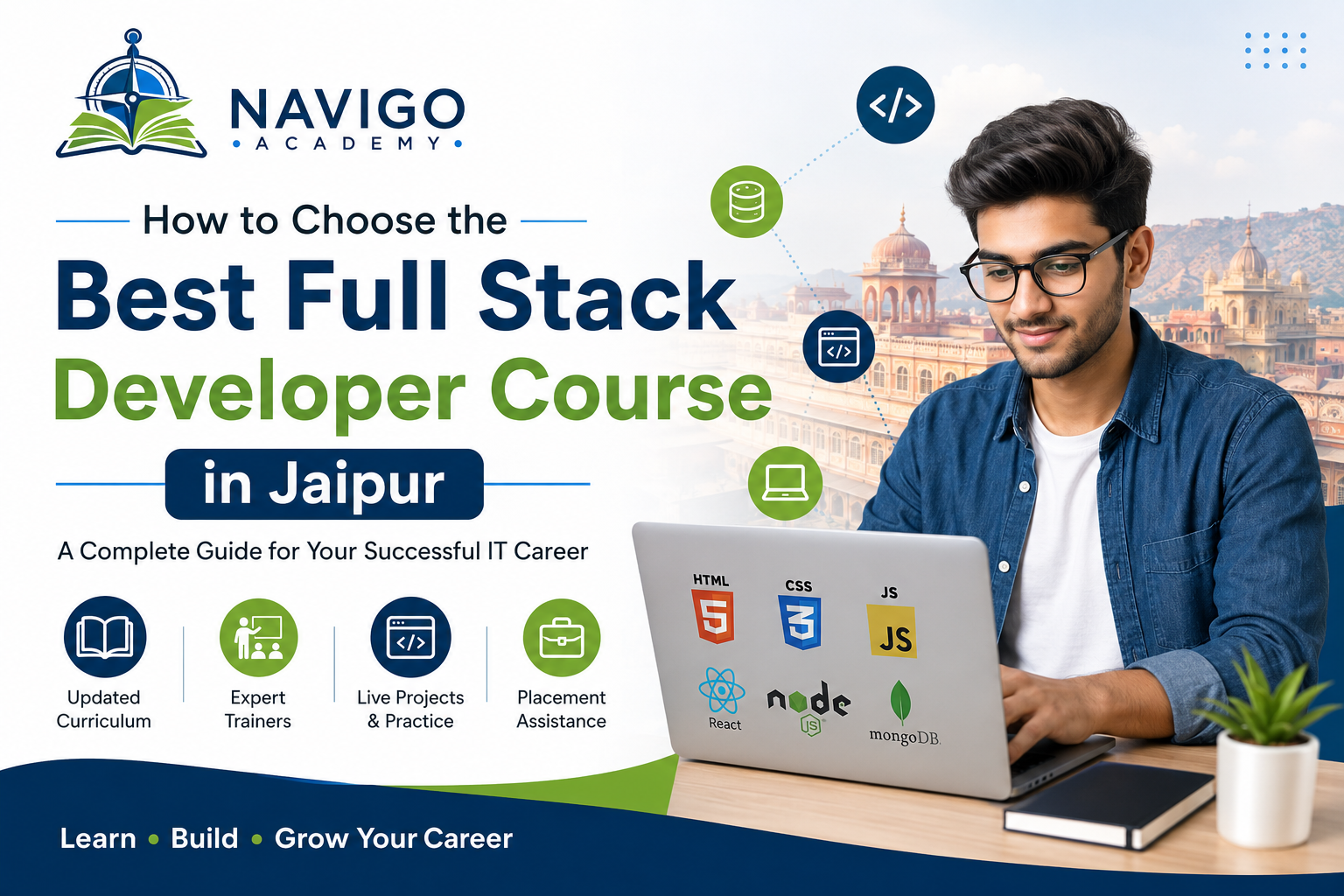
How to Choose the Best Full Stack Developer Course in Jaipur | Complete Guide 2026
The demand for full stack developers is growing rapidly as businesses continue to invest in websites, web applications, and digital products. Whether you are a student, a fresher, or a working professional, learning full-stack development can open the door to a rewarding career in the IT industry.
However, with so many training institutes available, selecting the right full-stack developer course in Jaipur can be confusing. Every institute promises quality training and placement support, but not all courses provide the practical skills required by employers.
This guide explains the most important factors to consider before enrolling in a full-stack development course.
What is a full-stack developer?
A full-stack developer is a software professional who can build both the front-end and back-end of a web application.
Front-End Development Includes
- HTML5
- CSS3
- JavaScript
- Bootstrap
- React.js or Angular
Back-End Development Includes
- Node.js
- Express.js
- PHP
- Python
- Java
Database Technologies
- MySQL
- MongoDB
- PostgreSQL
A full-stack developer understands the complete development process, from designing user interfaces to managing databases and deploying applications.
Why Choose a Full-Stack Developer Course in Jaipur?
Jaipur has become one of the fastest-growing IT and education hubs in Rajasthan. Many software companies, startups, and digital businesses actively hire skilled web developers.
Some benefits of learning in Jaipur include:
- Affordable course fees
- Experienced industry trainers
- Internship opportunities
- Live project experience
- Growing IT job market
- Easy access to placement assistance
These advantages make Jaipur an excellent place to begin a career in web development.
Things to Consider Before Choosing a Full-Stack Developer Course
Check the Course Curriculum.
A quality course should cover both beginner and advanced concepts.
Look for topics such as:
- HTML
- CSS
- JavaScript
- Bootstrap
- React.js
- Node.js
- Express.js
- REST APIs
- MongoDB
- SQL
- Git & GitHub
- Deployment
- Cloud basics
A complete curriculum prepares you for real-world development work.
Learn from Industry-Experienced Trainers
Experienced trainers provide practical insights that go beyond theory.
Choose an institute where trainers have:
- Professional development experience
- Industry certifications
- Live project exposure
- Strong mentoring skills
Learning from professionals helps you understand current development practices.
Focus on Practical Learning
Coding is a practical skill that improves through regular practice.
Choose a course that includes:
- Hands-on coding sessions
- Daily practical assignments
- Weekly coding challenges
- Mini projects
- Capstone projects
Practical learning helps build confidence and improves problem-solving abilities.
Look for Live Projects
Live projects help students understand how software is developed in real business environments.
Working on projects teaches:
- Team collaboration
- Version control
- Client requirements
- Bug fixing
- Testing
- Deployment
Project experience also strengthens your portfolio.
Internship Opportunities
Many institutes offer internships after training.
Internships allow students to:
- Gain professional experience
- Work with development teams
- Learn project management
- Improve technical skills
Practical experience increases employability.
Placement Assistance
Placement support is one of the most important factors while selecting a course.
Look for institutes that provide:
- Resume building
- Portfolio creation
- Mock interviews
- Technical interview preparation
- HR interview guidance
- Placement drives
Good placement assistance can make the transition from learning to employment much smoother.
Industry Certifications
A recognised certification adds value to your resume.
While skills remain the most important factor, certifications demonstrate your commitment to learning and help during job applications.
Flexible Learning Options
Choose a course that matches your schedule.
Many institutes provide:
- Classroom training
- Online classes
- Weekend batches
- Fast-track courses
- Evening batches
Flexible learning options are helpful for students and working professionals.
Compare Course Duration
Different institutes offer different learning schedules.
Typical course durations include:
| Course Type | Duration |
|---|---|
| Beginner Course | 3–4 Months |
| Professional Course | 6 Months |
| Advanced Job-Orientated Course | 6–9 Months |
Choose a duration that provides enough time for practical learning rather than rushing through topics.
Check Student Reviews
Before joining any institute, read genuine student reviews.
Look for feedback on:
- Teaching quality
- Trainer support
- Practical sessions
- Placement assistance
- Learning environment
Reviews often provide valuable insights into the overall learning experience.
Visit the Institute Before Admission
If possible, visit the training institute personally.
Observe:
- Classroom environment
- Computer labs
- Infrastructure
- Student interaction
- Faculty availability
Speaking with current students can also help you make an informed decision.
Questions to Ask Before Joining
Before paying the course fee, ask these questions:
- Does the course include live projects?
- Will I receive placement assistance?
- Are internships available?
- Is the curriculum regularly updated?
- Will I build a portfolio?
- Are interview preparation sessions included?
- What technologies will I learn?
- Are there coding practice sessions?
These questions help you compare different institutes effectively.
Skills You Should Gain During the Course
By the end of the training, you should be comfortable with:
- Responsive website development
- Front-end frameworks
- Back-end programming
- Database management
- REST API development
- Authentication systems
- Git and GitHub
- Debugging
- Application deployment
These skills are commonly expected in entry-level full-stack development roles.
Career Opportunities After Completing the Course
A full-stack developer course can prepare you for roles such as:
- Full-Stack Developer
- Front-End Developer
- Back-End Developer
- Web Developer
- Software Engineer
- React Developer
- Node.js Developer
- JavaScript Developer
- MERN Stack Developer
These positions are available in startups, software companies, IT firms, and technology organizations.
Salary Expectations
Salary depends on your skills, project experience, and employer.
Approximate salary ranges in India:
| Experience | Average Annual Salary |
|---|---|
| Fresher | ₹3 LPA – ₹6 LPA |
| 2–4 Years | ₹6 LPA – ₹12 LPA |
| Experienced Professional | ₹12 LPA – ₹20 LPA+ |
Developers with strong portfolios and practical experience often have better career opportunities.
Why Practical Experience Matters
Employers usually prefer candidates who can demonstrate their skills through projects.
Build projects such as:
- Portfolio website
- E-commerce application
- Student management system
- Blogging platform
- Task management application
- Online booking system
A strong project portfolio showcases your abilities and helps during interviews.
Tips for Choosing the Right Institute
When comparing institutes, prioritize:
- Updated curriculum
- Practical learning approach
- Experienced trainers
- Live projects
- Internship opportunities
- Placement support
- Student reviews
- Modern development tools
- Flexible learning schedules
- Affordable fees with quality training
Choosing an institute based on these factors can help you build a solid foundation for a successful development career.
Conclusion
Selecting the best Full Stack Developer Course in Jaipur requires more than comparing course fees. Focus on the quality of training, practical exposure, live projects, internship opportunities, and placement assistance. A well-structured course should help you develop both technical skills and real-world experience, enabling you to confidently pursue opportunities in the software industry.
Investing time in the right course can be the first step toward building a successful and long-term career as a full stack developer.
Frequently Asked Questions (FAQs)
What is the best Full Stack Developer Course in Jaipur?
The best course is one that offers an updated curriculum, experienced trainers, live projects, internship opportunities, and placement assistance.
Who can join a Full Stack Developer Course?
Students, fresh graduates, working professionals, and anyone interested in web development can enroll.
Do I need coding experience before joining?
No. Most beginner-friendly courses start with the fundamentals and gradually move to advanced concepts.
How long does it take to become a full stack developer?
Most comprehensive courses take between 4 and 9 months, depending on the learning schedule and depth of the curriculum.
Is full stack development a good career in 2026?
Yes. The demand for skilled full stack developers continues to grow across startups, software companies, and enterprises, making it a promising career option.

Recent Posts
Top Skills You Can Learn Through Digital Marketing Training in Jaipur
What Is the Career Scope After Full Stack Developer Training in Jaipur?
What Skills Do You Learn in Backend Development Training in Jaipur?
Tags