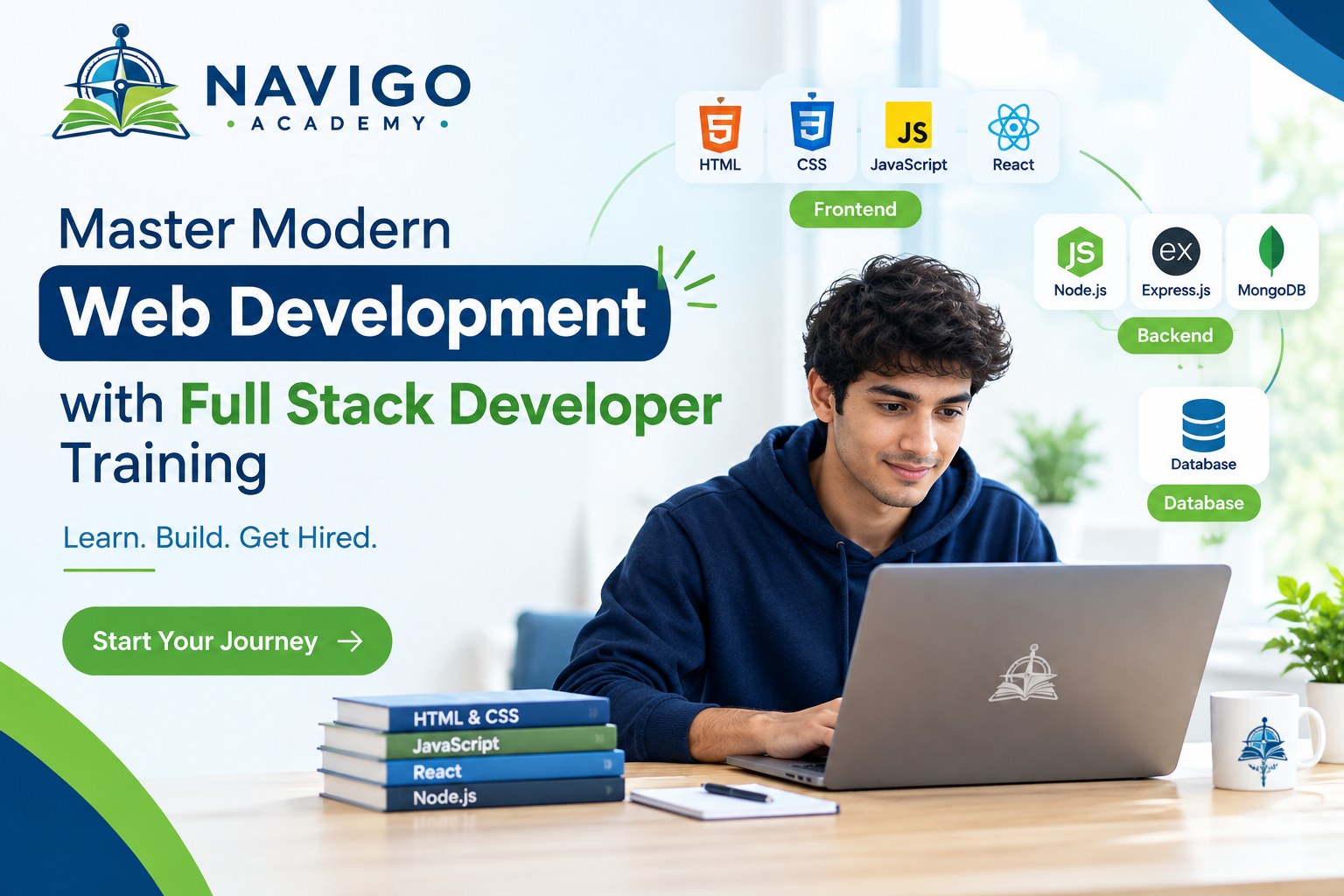
Web development has become one of the most in-demand career paths in India’s tech industry, and the fastest way to break into it is through structured full stack developer training. Whether you’re a fresher exploring your first tech career or a professional looking to upskill, mastering both front-end and back-end development opens doors to high-paying, future-proof jobs.
This guide walks you through what full stack development actually involves, the skills you need, how to choose the right training program, and why hands-on, project-based learning matters more than ever in 2026. By the end, you’ll know exactly what to look for and where to start.
What Is Full Stack Development?
Full stack development means being able to work on both the client side (front-end) and server side (back-end) of a web application. A full stack developer understands:
- Front-end technologies: HTML, CSS, JavaScript, React, or Angular
- Back-end technologies: Node.js, Python, Java, or PHP
- Databases: MySQL, MongoDB, or PostgreSQL
- Version control: Git and GitHub
- APIs and deployment: REST APIs, cloud hosting, and CI/CD basics
This versatility makes full stack developers extremely valuable to companies that want one person (or a small team) capable of handling an entire project lifecycle.
Why Enroll in Full Stack Developer Training?
Self-teaching from scattered YouTube tutorials often leads to gaps in fundamentals. Structured full stack developer training solves this by offering:
- A clear learning roadmap no guessing what to learn next
- Hands-on projects build a portfolio while you learn
- Mentorship get unstuck faster with expert guidance
- Placement support resume building, mock interviews, and job referrals
- Industry-aligned curriculum updated with current tech stacks and hiring trends
Employers increasingly prefer candidates with certified, project-backed training over purely self-taught profiles, especially for entry-level roles.
Core Skills You’ll Learn
1. Front-End Development
You’ll start with HTML and CSS fundamentals before moving to JavaScript and modern frameworks like React, which power most production-grade websites today.
2. Back-End Development
You’ll learn server-side logic, routing, authentication, and how to build APIs using Node.js or Python frameworks.
3. Database Management
Understanding both relational (SQL) and non-relational (NoSQL) databases is essential for handling real-world application data.
4. Deployment & DevOps Basics
Modern training also covers deploying applications using platforms like Vercel, Render, or AWS, along with basic Git workflows.
5. Soft Skills & Interview Prep
Good programs include communication training, resume workshops, and mock technical interviews to prepare you for the hiring process.
How to Choose the Right Training Program
| Factor | What to Look For |
|---|---|
| Curriculum | Covers both front-end and back-end in depth |
| Projects | Real-world, portfolio-worthy projects |
| Trainers | Industry-experienced instructors |
| Placement Support | Resume help, interview prep, hiring tie-ups |
| Batch Size | Small batches for personalized attention |
| Reviews | Genuine student outcomes and testimonials |
If you’re searching for the best IT training institute in Mansarovar Jaipur, prioritize institutes that combine live projects with mentorship rather than pre-recorded, one-size-fits-all courses.
Career Opportunities After Full Stack Training
Completing a full stack program opens up roles such as:
- Full Stack Developer
- Front-End Developer
- Back-End Developer
- Web Application Developer
- Software Engineer (Web)
Salaries for freshers typically start competitively and scale quickly with 1–2 years of hands-on project experience, especially for developers proficient in the MERN stack (MongoDB, Express, React, Node.js).
Why Local, In-Person Training Still Matters
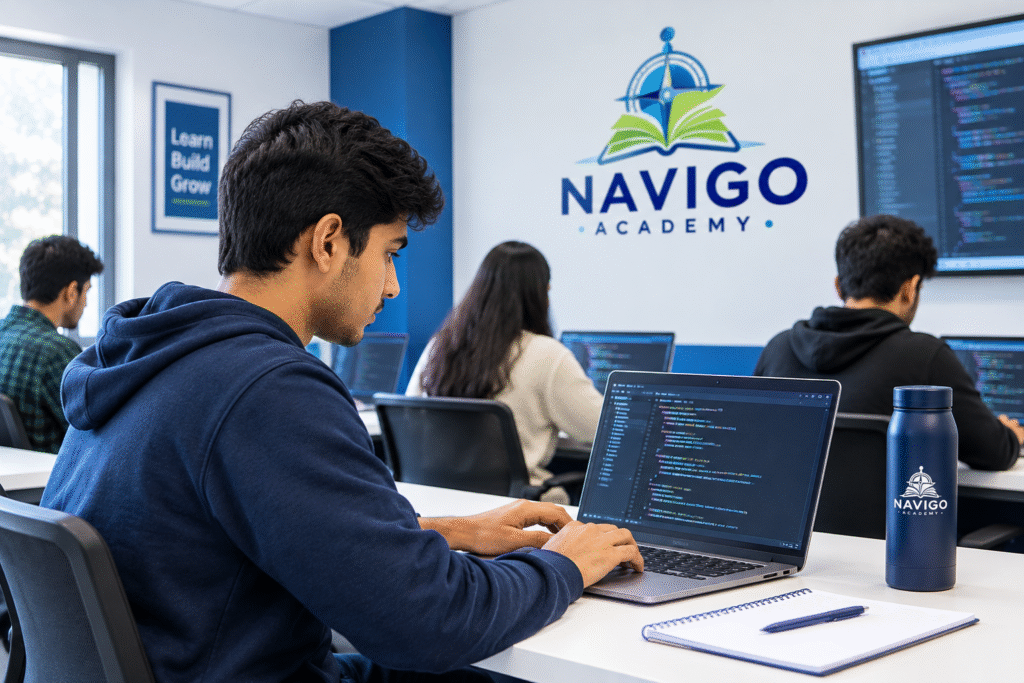
While online courses offer flexibility, in-person full stack developer training provides direct mentorship, peer learning, and real-time doubt resolution all of which accelerate learning speed. For learners in Jaipur, choosing the best IT training institute in Mansarovar Jaipur means getting local support, in-person networking, and easier access to instructors for one-on-one guidance.
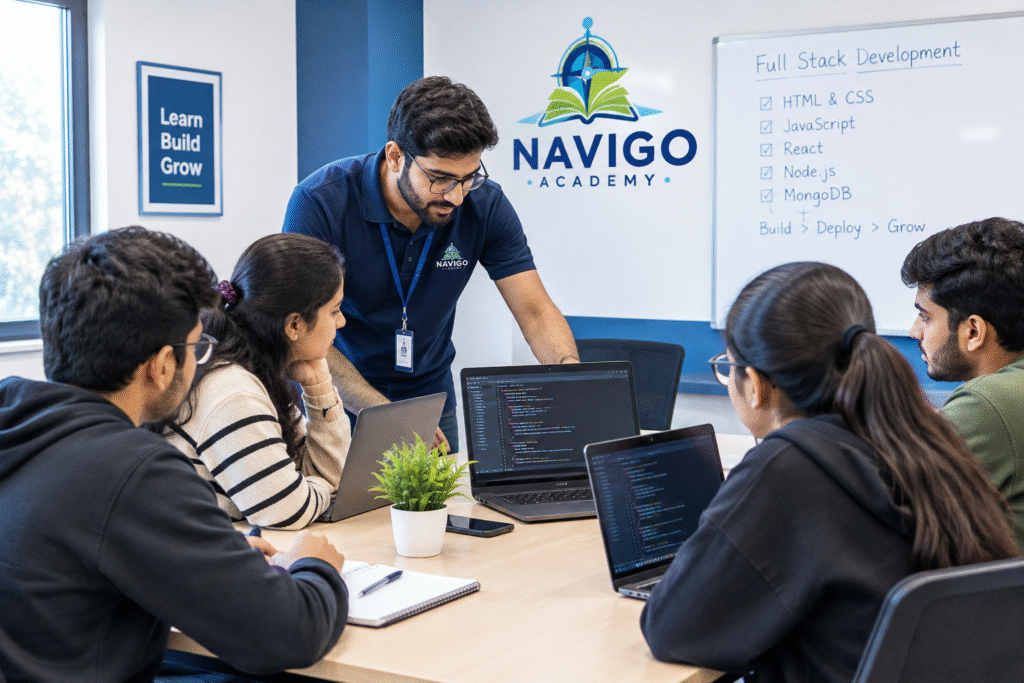
Navigo Academy offers exactly this kind of hands-on, mentor-led environment for students looking to build real, job-ready full stack skills.
Conclusion
Becoming a skilled full stack developer isn’t just about learning to code it’s about learning to build complete, functional applications from start to finish. The right full stack developer training program gives you structured learning, real projects, and career support that self-study alone can’t match. If you’re in Jaipur and looking for the best IT training institute in Mansarovar Jaipur, choosing a mentor-led, project-based program like the one at Navigo Academy can be the difference between a scattered learning path and a job-ready skill set.
FAQs
1. What is full stack developer training?
It’s a structured program teaching both front-end and back-end web development, covering languages, frameworks, databases, and deployment.
2. How long does full stack developer training take?
Most comprehensive programs run 4–8 months, depending on depth and whether it’s full-time or part-time.
3. Do I need coding experience to start?
No. Most beginner-friendly programs start from the basics of HTML and CSS before progressing to advanced topics.
4. Which technologies are covered in full stack training?
Typically HTML, CSS, JavaScript, React, Node.js, Express, and databases like MongoDB or MySQL.
5. Is full stack development a good career choice in 2026?
Yes. Demand for versatile developers who can handle both client and server-side work continues to grow across startups and enterprises.
6. What is the average salary after full stack training?
Freshers typically start with competitive entry-level packages, which increase substantially with practical project experience.
7. Can I get a job right after training?
With strong projects, interview preparation, and placement support, many graduates secure roles within a few months of completing training.