
Breaking into tech doesn’t have to drain your savings. Every year, thousands of students and working professionals look for practical, budget-friendly training that actually leads to a job, not just a certificate. The good news is that India’s training ecosystem has matured enough that “affordable” no longer has to mean “low quality”.
If you are exploring web development courses in Jaipur, it is important to understand what makes a program genuinely worth your money. In this guide, we’ll explain how to evaluate placement claims critically and what to check in a curriculum before enrolling. Whether you’re a fresher starting your first tech career or a working professional planning a career switch, this article will help you make an informed and cost-effective decision.

Why Web Development Is Still a Smart Career Choice
Before comparing courses, it helps to understand why this field continues to attract so many learners:
- High demand across industries: every business now needs a website or web app, from startups to enterprises.
- Multiple specialisation paths: front-end, back-end, full-stack, or niche areas like e-commerce development.
- Remote and freelance flexibility: web developers can work with clients or companies from anywhere.
- Reasonable entry barrier: unlike some engineering disciplines, you can start learning practical skills in a few months.
- Continuous upskilling opportunities frameworks and tools evolve, keeping the learning curve interesting rather than stagnant.
These factors make web development one of the most searched career paths among students choosing a training programme today.
What “Affordable” Should Actually Mean
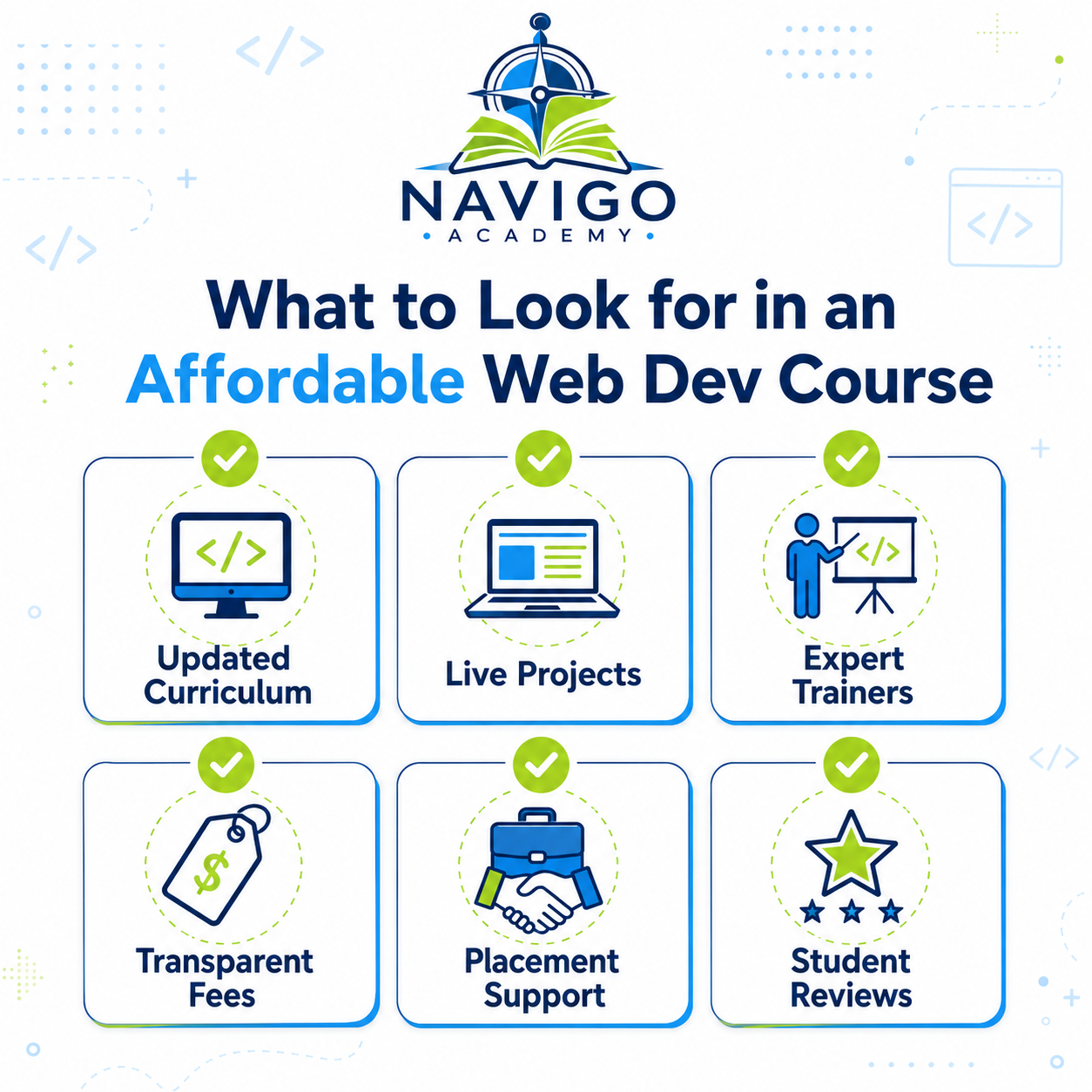
Many training providers use “affordable” as a marketing hook without backing it up with value. Before you commit, check whether the course offers:
- Transparent fee structure: no hidden charges for certification, project access, or placement assistance.
- Practical, project-based learning, not just recorded lectures.
- Updated curriculum covering current tools and frameworks, not outdated syllabi.
- Real placement support, mock interviews, resume building, and verified hiring partners.
- Reasonable batch sizes so you actually get mentor attention.
A course priced low but missing these fundamentals isn’t affordable; it’s just cheap, and the difference matters for your career outcome.
Key Factors to Compare Before Enrolling
1. Curriculum Depth
Look for coverage of HTML, CSS, JavaScript, at least one front-end framework (like React), back-end basics (Node.js or similar), databases, and version control (Git/GitHub). A shallow curriculum will leave gaps that show up in interviews.
2. Hands-On Projects
Employers care about what you’ve built, not just what you’ve studied. Prioritise programmes where you complete multiple real-world projects for your portfolio.
3. Placement Track Record
Ask for verifiable placement data, company names, average packages, and alumni you can actually speak to. Vague claims like “100% placement” without evidence should raise questions.
4. Mentor Support
Live doubt-clearing sessions and mentorship from industry professionals make a significant difference compared to self-paced-only formats.
5. Certification Value
A recognised certificate adds credibility to your resume, especially if the institute has industry tie-ups or strong local recognition.
Comparison: Types of Web Development Training Formats
| Format | Best For | Typical Duration | Placement Support |
|---|---|---|---|
| Full-time classroom program | Freshers wanting structured learning | 4–6 months | Usually strong |
| Weekend/part-time program | Working professionals | 6–9 months | Moderate to strong |
| Self-paced online course | Self-motivated learners | Flexible | Often limited |
| Hybrid (live + recorded) | Balanced learners | 3–5 months | Strong if institute-backed |
Choosing the right format depends on your current commitments, learning style, and how quickly you want to enter the job market.
Red Flags to Watch Out For
- Courses that guarantee jobs without any skill assessment.
- No sample curriculum available before payment.
- No trial class or demo session offered.
- Reviews that all sound identical or overly promotional.
- Pressure tactics to enroll immediately with “limited-time” discounts.
Take your time. A legitimate programme will always let you evaluate before you commit.
Choosing a Local Training Institute in Jaipur
While online platforms offer convenience, many learners, especially freshers, benefit from in-person or hybrid mentorship, doubt resolution, and networking that local institutes provide. If you’re evaluating the best IT training institute in Mansarovar, Jaipur, it’s worth shortlisting institutes that combine affordable fees with verifiable placement partnerships and hands-on project training, rather than picking purely on price.
One such option in this space is Navigo Academy, which focuses on practical, project-based IT training for learners in Jaipur looking to build job-ready web development skills.
How to Budget for a Web Development Course
- Compare total cost, not just the advertised fee factor in study materials, certification, and any add-on charges.
- Check for EMI or instalment options if you’re a student on a limited budget.
- Avoid the most expensive or cheapest option; the default value comes from curriculum and outcomes, not price extremes.
- Ask about refund or trial policies in case the course isn’t the right fit.
Steps to Choose the Right Course for You
- Define your goal: front-end, back-end, or full-stack.
- Shortlist 3-5 institutes or platforms based on curriculum and reviews.
- Attend demo sessions wherever offered.
- Verify placement claims independently.
- Compare total cost against value delivered.
- Enroll and commit to consistent practice.
Conclusion
Finding a course that’s both affordable and effective comes down to looking past marketing claims and evaluating curriculum depth, mentorship quality, and genuine placement support. Don’t rush the decision; request a demo class, talk to alumni if possible, and compare a few shortlisted programmes before enrolling. A well-chosen course today can set the foundation for a rewarding, long-term career in tech.
Frequently Asked Questions
1. Are affordable web development courses actually good quality?
Yes, if you check the curriculum depth, project work, and placement support rather than judging purely by price.
2. How long does it take to become job-ready in web development?
Most structured programmes take 4–6 months for freshers to reach a job-ready skill level, depending on prior experience.
3. Do I need a coding background to start?
No. Most beginner-friendly programmes start from the basics and don’t require prior programming knowledge.
4. What’s the difference between front-end and full-stack courses?
Front-end courses focus on the visual and interactive part of websites, while full-stack courses also cover server-side logic and databases.
5. Is online learning as effective as classroom training?
It depends on your learning style. Classroom or hybrid formats often offer better accountability and mentor access for beginners.
6. What should I check before trusting a placement guarantee?
Ask for verifiable hiring partner names and past placement records, and if possible, speak directly with alumni.