The tech industry is growing faster than most people realize. Every business, from a neighborhood bakery to a global enterprise, needs a website or web application. This consistent demand has made web development one of the most sought-after skills in today’s job market. If you’ve been thinking about learning this skill, understanding what career doors it opens can help you make a confident decision.
Completing a web development course doesn’t just teach you how to code. It equips you with a complete set of professional skills that employers actively search for. The career paths available after graduation are diverse, rewarding, and full of growth potential. Whether you want a stable office job, a remote position, or the freedom of freelancing, web development gives you options that few other fields can match.
Why Web Development Careers Are Thriving
The internet continues to expand every single day. New businesses launch online, existing companies upgrade their digital platforms, and consumers expect seamless digital experiences wherever they go. Behind all of this activity are web developers, the people who build, maintain, and improve the websites and applications that power the modern world.
This isn’t a temporary trend. Multiple industry reports consistently project strong growth for web development roles over the next decade. Companies are competing for talented developers, which means salaries are competitive and opportunities are abundant. For anyone entering the field now, the timing couldn’t be better.
Career Paths Available After a Web Development Course
Once you complete a comprehensive web development course, several career directions become available to you. Each path has its own focus, salary range, and growth trajectory. Let’s explore the most promising options.
Front-End Developer
This role focuses on everything users see and interact with on a website. You’ll use HTML, CSS, JavaScript, and frameworks such as React or Angular to build responsive, visually appealing interfaces. Front-end developers are essential to every web project because they bridge the gap between design and functionality.
Companies of all sizes hire front-end developers, and the role offers plenty of creative satisfaction. You get to see your code come alive as interactive pages and applications that real people use every day.
Back-End Developer
The back end is where the logic, databases, and server-side operations happen. As a back-end developer, you’ll handle data processing, user authentication, API creation, and server management using technologies such as Node.js, Python, PHP, or Ruby.
This role suits people who enjoy solving complex problems and building the systems that power applications behind the scenes. Back-end developers are in high demand because every application that stores data or processes transactions needs a solid server-side foundation.
Full-Stack Developer
A full-stack developer handles both front-end and back-end responsibilities. This versatility makes you extremely valuable to employers, especially startups and smaller companies that need one person to manage entire projects independently.
The demand for full-stack developers has grown significantly because businesses prefer professionals who understand the complete development process. This role also tends to offer higher salaries due to the broader skill set required.
Freelance Web Developer
Freelancing offers the freedom to choose your clients, set your own rates, and manage your schedule. After completing a course and building a solid portfolio, many developers transition into freelance careers where they serve multiple clients simultaneously.
Platforms such as Upwork, Fiverr, and Toptal connect freelancers with businesses worldwide. The ability to work remotely means you’re not limited to local opportunities; you can serve clients from anywhere in the world, which significantly increases your earning potential.
Other Rewarding Career Options
Beyond the core development roles, a web development course opens doors to several related careers:
UI/UX Developer
This role combines development skills with design thinking to create user interfaces that are both functional and enjoyable. You’ll focus on how users navigate websites and applications, ensuring every interaction feels smooth and intuitive. Companies prioritize user experience because it directly affects customer satisfaction and conversion rates.
WordPress Developer
WordPress powers a massive percentage of all websites on the internet. Specializing in WordPress development, building custom themes, plugins, and tailored solutions, creates a niche career with consistent demand. Small businesses, bloggers, and e-commerce stores regularly need WordPress experts to build and maintain their sites.
E-Commerce Developer
Online shopping continues to grow year after year. E-commerce developers specialize in building and maintaining online stores using platforms such as Shopify, WooCommerce, and Magento. This specialization is particularly lucrative because businesses depend on their online stores for revenue and need them to run flawlessly at all times.
Web Application Developer
Beyond traditional websites, web applications power tools such as project management systems, CRM platforms, and SaaS products. This role involves building complex, interactive applications that run in browsers and serve specific business functions. The demand for web app developers is especially strong in the startup ecosystem.
Technical Project Manager
Developers who gain a few years of experience can transition into project management roles where they oversee development teams and manage project timelines. Your technical background gives you an edge because you understand the challenges developers face and can make realistic plans and decisions.
Choosing the Right Training Program Matters
Not all courses deliver the same results. The program you choose directly impacts your readiness for the job market. A strong course covers modern technologies, includes real-world projects, and provides mentorship from experienced professionals. The difference between a mediocre program and an excellent one can shape your entire career trajectory.
If you’re evaluating options and want to understand what makes a training program truly effective, our detailed guide on the best institutes for web development courses breaks down the key factors you should consider before enrolling.
Where to Start Your Web Development Learning Journey
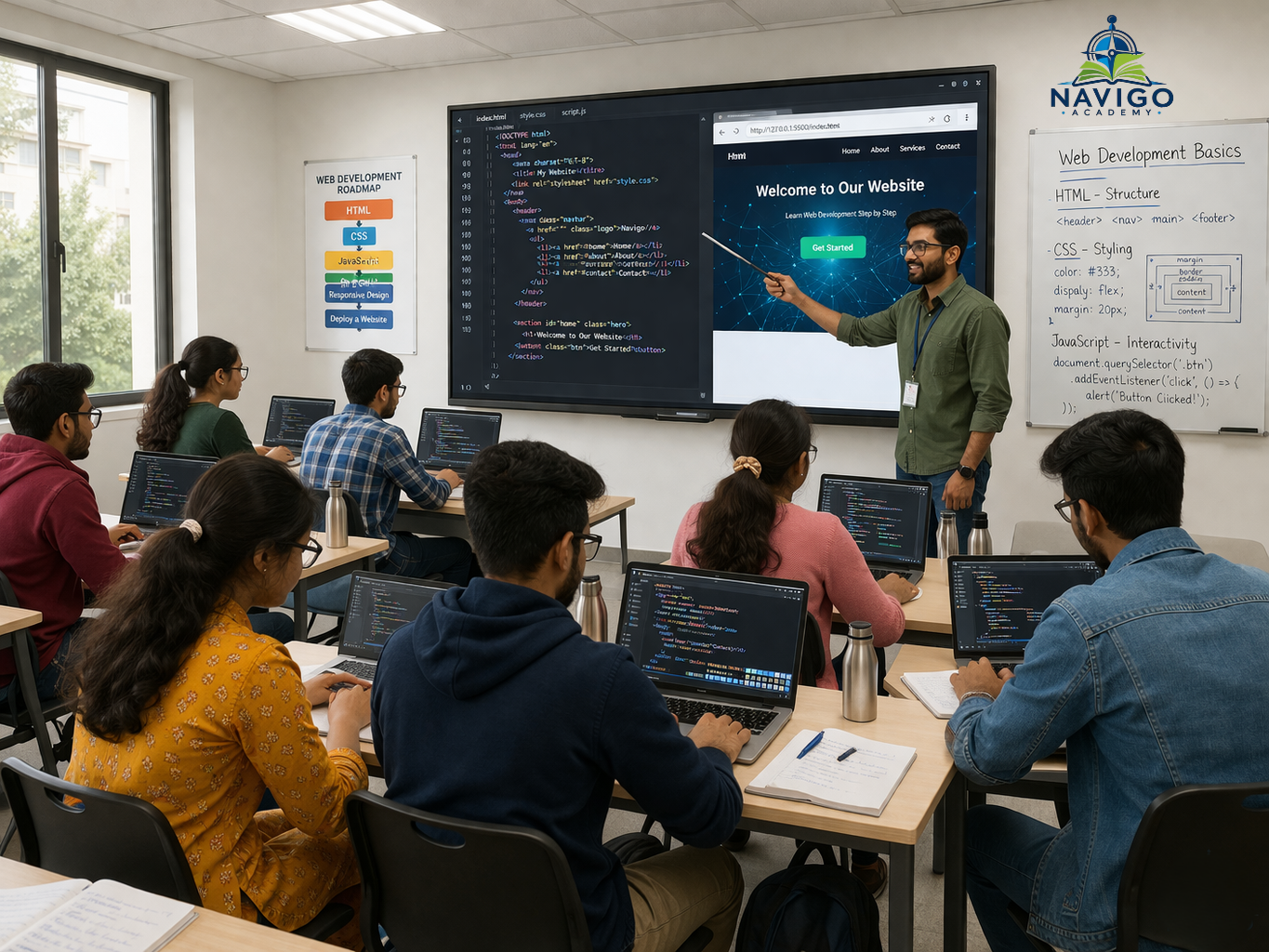
Finding the right institute is just as important as choosing the right career path. For students in Rajasthan searching for the best web development institute in Jaipur, Navigo Academy delivers a program that balances theory with hands-on practice. Students build real projects, receive personalized mentorship, and graduate with a portfolio that demonstrates their abilities to potential employers. The curriculum stays current with industry standards, ensuring that graduates are prepared for the demands of modern development roles.
Salary Expectations for Web Developers
Understanding earning potential helps you set realistic goals. Here’s a general overview of what web developers can expect in India:
Entry-Level (0-1 years): ₹2.5 to ₹5 lakhs per annum. At this stage, you’re building experience and refining your skills on professional projects.
Mid-Level (2-4 years): ₹5 to ₹12 lakhs per annum. With proven experience and a strong portfolio, your value increases substantially.
Senior-Level (5+ years): ₹12 to ₹25 lakhs per annum or more. Senior developers and technical leads command premium salaries, especially in specialized areas.
Freelance Developers: Earnings vary based on client base, project complexity, and reputation. Experienced freelancers can earn ₹50,000 to ₹2 lakhs or more per month, depending on the volume and nature of their projects.
These figures improve further for developers who specialize in high-demand technologies or serve international clients.

Skills That Make You Stand Out in the Job Market
Completing a course gives you the technical foundation, but certain additional skills can accelerate your career growth:
Version Control (Git/GitHub)
Every professional development team uses version control to manage code. Being proficient with Git and GitHub demonstrates that you can collaborate effectively and manage codebases responsibly. Employers expect this skill as a baseline requirement for any development role.
Problem-Solving and Debugging
The ability to identify issues quickly and resolve them efficiently separates average developers from great ones. Employers value candidates who approach problems methodically and don’t panic when things break. This skill improves with practice and becomes sharper throughout your career.
Communication and Teamwork
Writing code is only part of the job. Explaining your approach to non-technical stakeholders, collaborating with designers and product managers, and participating in code reviews all require strong communication. Developers who communicate well advance faster in their careers.
Continuous Learning
Web technologies evolve constantly. New frameworks emerge, best practices change, and user expectations grow. Demonstrating a habit of continuous learning, through side projects, open-source contributions, or additional courses, shows employers that you’ll stay relevant and keep improving.
Building Your Portfolio Before You Graduate
Your portfolio is your most powerful job-search tool. Start building it during your course, not after. Every project you complete, whether it’s a personal website, an e-commerce store, or a web application, should be documented and showcased.
Include a description of each project, the technologies you used, the problems you solved, and screenshots or live links. A well-organized portfolio tells employers that you’re serious about your craft and capable of delivering results. Many hiring decisions come down to what candidates can show, not just what they claim on a resume.
Remote Work and Global Opportunities
Web development is one of the most remote-friendly careers available. Companies across the world hire developers regardless of their physical location. This means completing a course in Jaipur can lead to job opportunities with companies in Bangalore, Mumbai, Dubai, London, or Silicon Valley.
Remote positions also tend to offer higher salaries because companies budget based on the value you provide rather than your geographic location. The flexibility to work from home or anywhere with an internet connection adds quality-of-life benefits that many professionals deeply appreciate.
How to Land Your First Job After the Web Development Course
Getting your first role requires more than just technical skills. Here are a few strategies that improve your chances significantly:
Prepare thoroughly for technical interviews by practicing coding challenges on platforms such as LeetCode and HackerRank. Build at least three to five portfolio projects that demonstrate different skills. Customize your resume for each application, highlighting relevant technologies and project outcomes. Attend local meetups and connect with professionals on LinkedIn to expand your network.
Don’t underestimate the power of internships. Even a short-term internship gives you professional experience, adds credibility to your resume, and can lead directly to a full-time offer. Many companies use internships as a hiring pipeline, preferring to convert interns who have already proven their abilities.
Conclusion
Completing a web development course opens up a world of career possibilities that are both financially rewarding and personally fulfilling. From front-end and back-end roles to freelancing and entrepreneurship, the paths available to trained developers are diverse and plentiful. The key is choosing a quality program, building a strong portfolio, and staying committed to continuous improvement.
The tech industry rewards skilled professionals who can deliver results. By investing in the right training now, you position yourself for a career that offers stability, growth, flexibility, and the satisfaction of building things that millions of people use every day. Start your journey today, the opportunities are waiting.
Frequently Asked Questions
Q: Can I get a job immediately after completing a web development course?
Yes, many graduates secure positions within a few months of completing their course. Your chances improve significantly if you have a strong portfolio, practical project experience, and have prepared well for technical interviews. Institutes that offer placement assistance further accelerate this process.
Q: Is a degree in computer science required to become a web developer?
No. While a CS degree can be helpful, it is not mandatory. Many successful web developers come from non-technical backgrounds. What employers care about most is your ability to build functional, clean, and responsive websites and applications—skills that a quality course provides, regardless of your academic background.
Q: Which programming languages should I focus on for the best career prospects?
HTML, CSS, and JavaScript form the essential foundation. Beyond these, learning a framework such as React, Angular, or Vue for front-end work and Node.js or Python for back-end development positions you well for the majority of available roles.
Q: Is freelancing a realistic career option after completing the best web development course in Jaipur?
Absolutely. Freelancing is a very viable path once you have a solid portfolio and a few completed projects. Many developers start freelancing part-time while employed and transition to full-time freelancing as their client base grows. The global demand for web development services makes freelancing particularly attractive.
Q: How do I stay relevant as a web developer over time?
The key is continuous learning. Follow industry blogs, take short courses on new technologies, contribute to open-source projects, and attend developer meetups or webinars. Building a habit of learning ensures your skills stay current and your career continues to grow.
Q: Are web development careers future-proof?
As long as businesses need websites and web applications, and that need shows no sign of decreasing, web developers will remain in demand. The technologies may change, but the core skills of building for the web will continue to be valuable for the foreseeable future.